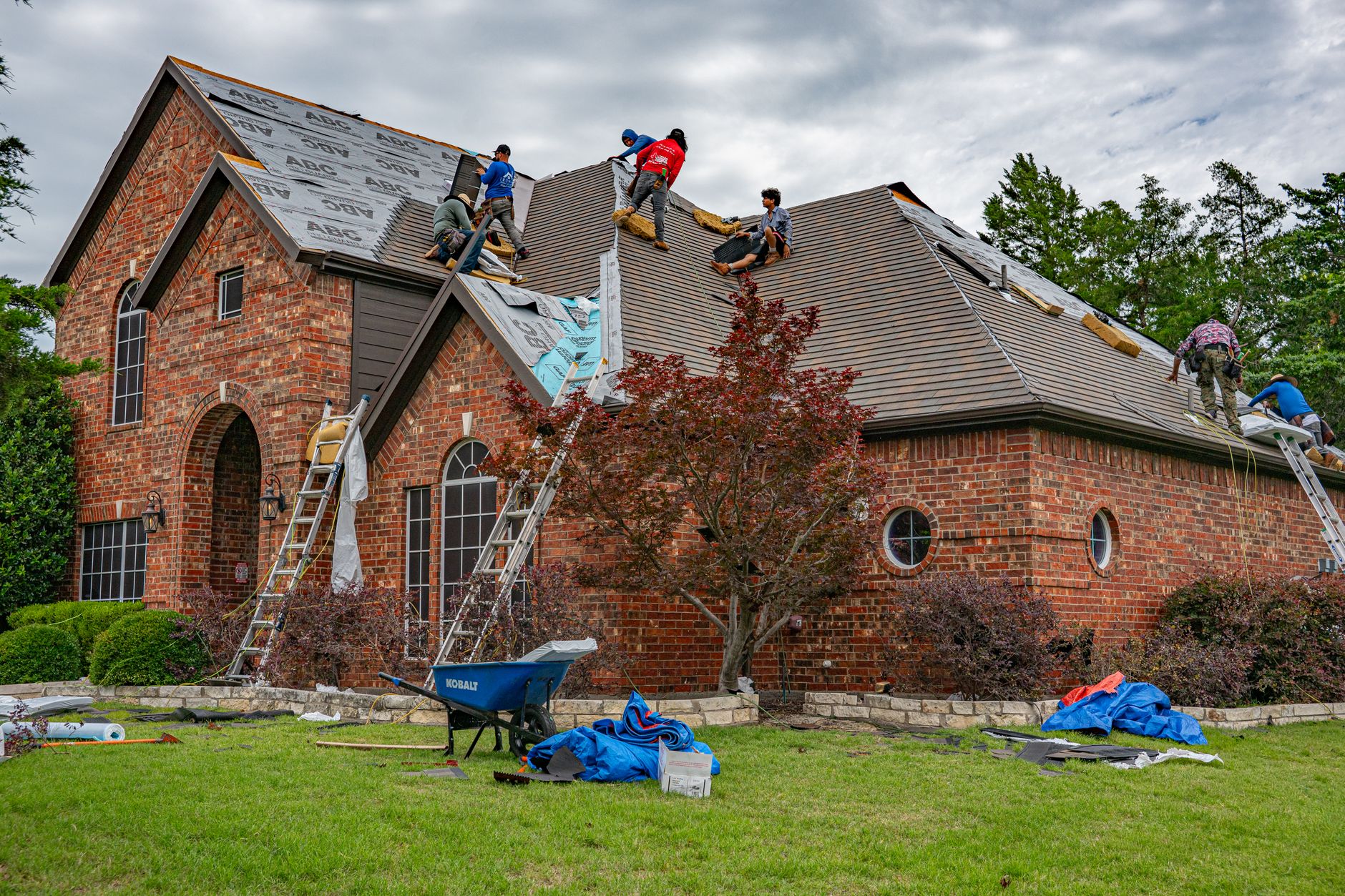
Why the leak is almost never where the stain is
Water gets in at a high point, runs along the wood or the underlayment, and drips down somewhere else entirely, so the wet spot on your ceiling is a clue, not a map. This is why chasing a leak is a skill. A roofer who has done it a while will look uphill from the stain, check the flashing and the penetrations first, and often run water on the roof to find the real entry point before quoting a fix.
Be wary of anyone who wants to reshingle a whole slope to fix one drip without finding the source.
What usually causes it
On most homes the shingles in the open field of the roof are fine and the trouble is at the transitions: the metal flashing where the roof meets a wall or a chimney, the rubber boots around plumbing vents that dry out and crack in this sun, the valleys where two roof planes dump water together, and the seams around skylights.
Wind also lifts and tears individual shingles, and once one is gone the one above it is exposed. These are all normal repairs, not signs the whole roof is done.
When a patch is genuinely enough
If the roof is otherwise in good shape and the damage is contained to one area, a repair is the right call and anyone telling you to replace the whole thing over one leak is overselling. The honest threshold most roofers use is roughly this: once you are repairing more than about fifteen percent of the roof, or the same roof keeps failing in new spots, the repairs stop being worth it and a replacement is the smarter money. Below that, fix what is broken and move on.
After a storm, protect first and fix second
If a storm tears a hole or lifts a section, the first job is getting a tarp down so the inside of your house stays dry, and the real repair or claim comes after. A roofer worth calling will get you covered quickly and will not pressure you into a full replacement decision while you are standing in the rain.
If the damage looks storm-related, take photos before anyone touches it, because that matters for a claim.
- The stain on your ceiling is rarely under the actual leak; water travels before it drips
- Flashing around chimneys, vents, and valleys is the most common real culprit, not the shingles
- A fast tarp after a storm protects the inside while you wait for a proper fix
Questions people ask about Roof Repair and Leaks
Why does my roof only leak in a hard rain?
Because wind-driven rain finds openings that ordinary rain never reaches, forcing water sideways under flashing and shingle edges. It is a classic coastal pattern, and it means the leak has a specific entry point that a normal shower does not exercise. That is a findable, fixable repair, not a mystery.
Can I just seal it myself with a tube of roofing tar?
You can, and roofers can tell you how those calls end: the goo hides the entry point, the water moves somewhere else, and the eventual proper repair is harder because the evidence is buried under tar. A small repair done right is cheap. Cosmetic sealant over an unfound leak is a deferral, not a fix.
How urgent is a small leak really?
More than it looks. The stain on the ceiling is the end of the story; the beginning is water running along decking and framing, quietly rotting wood the whole way. A leak handled this month is a flashing repair. The same leak next year can be decking, insulation, and drywall.
New to this? The plain-English guide to ordering walks through what to decide first.